


24/7 Gym Compliance and Security in Australia: What Unstaffed Access Requires
The Short Answer
Running a 24/7 unstaffed gym in Australia means taking on the safety and security role a staff member would normally cover, and requirements vary by state and council. Expect to plan for CCTV covering all training areas and entry points, duress alarms, strong lighting, a documented member induction, clear emergency procedures, an AED on site, and insurance that specifically covers unstaffed hours. Access control software ties entry, video and alerts together, and it is worth getting right before you flip the doors to 24/7.
Members love 24/7 access because it fits around shift work, early starts and late finishes, and it is one of the fastest ways to lift membership numbers in a competitive market. But every hour your gym is open without a staff member on the floor is an hour your systems, not a person, are responsible for a member's safety. Get the basics right once during fit-out and 24/7 access becomes a genuine point of difference rather than a liability.
What unstaffed operation actually means for compliance
There is no single national 24/7 gym law in Australia. Instead, unstaffed access interacts with several separate obligations: your state's work health and safety framework, since you still owe members a duty of care as occupiers of the premises even with no staff present, your council's approval for the use, see our council approval guide, your public liability insurance, and your own membership agreement. Requirements and expectations vary by state and by council, so confirm specifics with your council and your insurer rather than assuming a policy from interstate applies locally.
Most operators do not try to remove risk entirely, since a certain amount of risk comes with running any gym, staffed or not. The goal is to make sure a member in trouble at 2am has the same realistic chance of getting help as a member training at 2pm with a coach on the floor. That means designing the systems, not just buying them: where cameras actually point, how fast a duress alert reaches a real person, and whether your emergency signage still makes sense once the rig and cardio equipment are in and the room looks nothing like the empty floor plan you first signed off.
In practice, most operators treat unstaffed compliance as a checklist: CCTV, duress alarms, lighting, signage, induction, emergency procedures, and a device or app-based way for a member in trouble to get help fast. None of these are exotic requirements, but skipping any one of them is the difference between a manageable incident and a serious one.
CCTV coverage: what to actually point cameras at
Cameras should cover every training area, all entry and exit points, corridors, and areas around change rooms and toilets, without pointing into them. The goal is two things: a member should be visible on camera within a few seconds of needing help anywhere on the floor, and footage should exist to review an incident, resolve a dispute, or support police if something happens.
Budget for enough camera coverage and enough storage retention, most operators keep footage for at least 30 days, that you are not caught out reviewing an incident from three weeks ago and finding the footage has already been overwritten. Check your camera positions against your actual equipment layout once the rig, benches and machines are in, not just against the empty floor plan, since equipment blocks sightlines.
Duress alarms and how a member calls for help
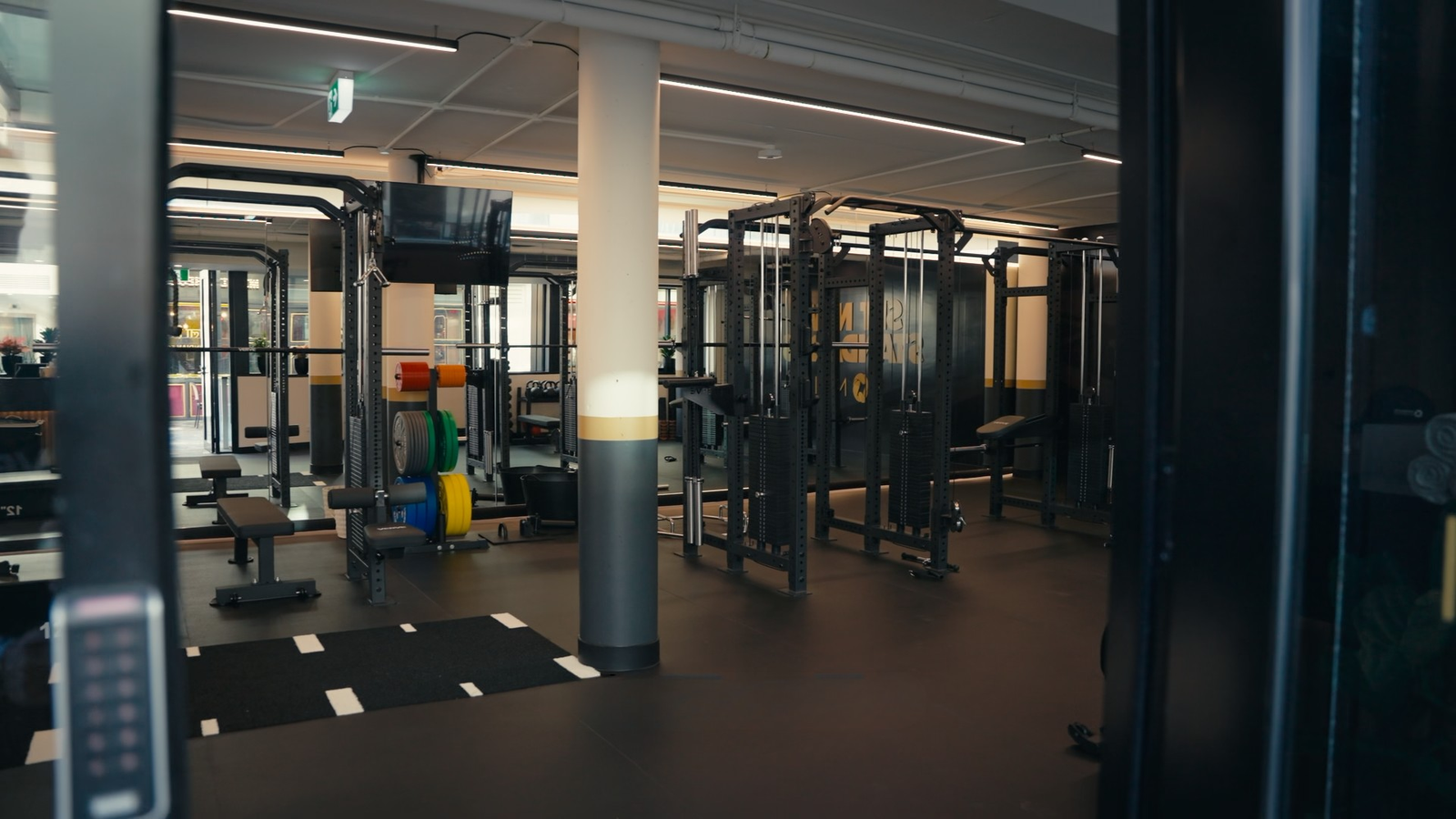
A duress alarm, whether a wall-mounted panic button, a wearable fob, or an in-app SOS feature, is what turns the presence of cameras into someone actually being notified right now. Most 24/7 operators wire duress alarms through to a monitoring service or to the gym owner and a nominated backup, with a clear, written escalation path: who gets called first, what they do, and when it escalates to emergency services.
Test the system regularly, not just at installation. A duress alarm nobody has tested since the day it was fitted is a liability sitting on your wall, and your insurer will ask about testing frequency if you ever need to make a claim.
Lighting, signage and the member induction
Good lighting is both a safety and a security measure: well-lit car parks, entries and training floors deter opportunistic incidents and make CCTV footage usable. Pair it with clear signage, emergency exits, duress alarm locations, and what to do in a medical emergency, so a member under stress does not have to think hard to find help.
Every 24/7 gym should run members through a documented induction before their first unstaffed visit: how to swipe or scan in, where the duress alarms are, what to do if the door will not open, and basic equipment safety. Keep a record that each member completed it. It protects the member and it protects you if an incident is ever reviewed.
Access control and the software behind the door
Access control, the fob, app or PIN system that lets members in, does more than open the door. Good systems log exactly who is on site at any given time, which matters enormously if something goes wrong and you need to know who was in the building. Gym management platforms like VERVE Pulse tie member access, attendance and alerts together in one system, so a duress event or a door left ajar shows up against a real member record rather than an anonymous swipe.
Whatever system you choose, make sure it can flag anomalies automatically, a door held open, a member who swiped in but never swiped out, because an unstaffed gym only works if the software is doing the watching when a person is not.
See Your 24/7 Gym Before You Build It
Send us your floor plan and we will help you plan camera lines, duress points and lighting into the layout, with renders back within a week and a video walkthrough.
Request Your Free DesignEmergency procedures and having an AED on site
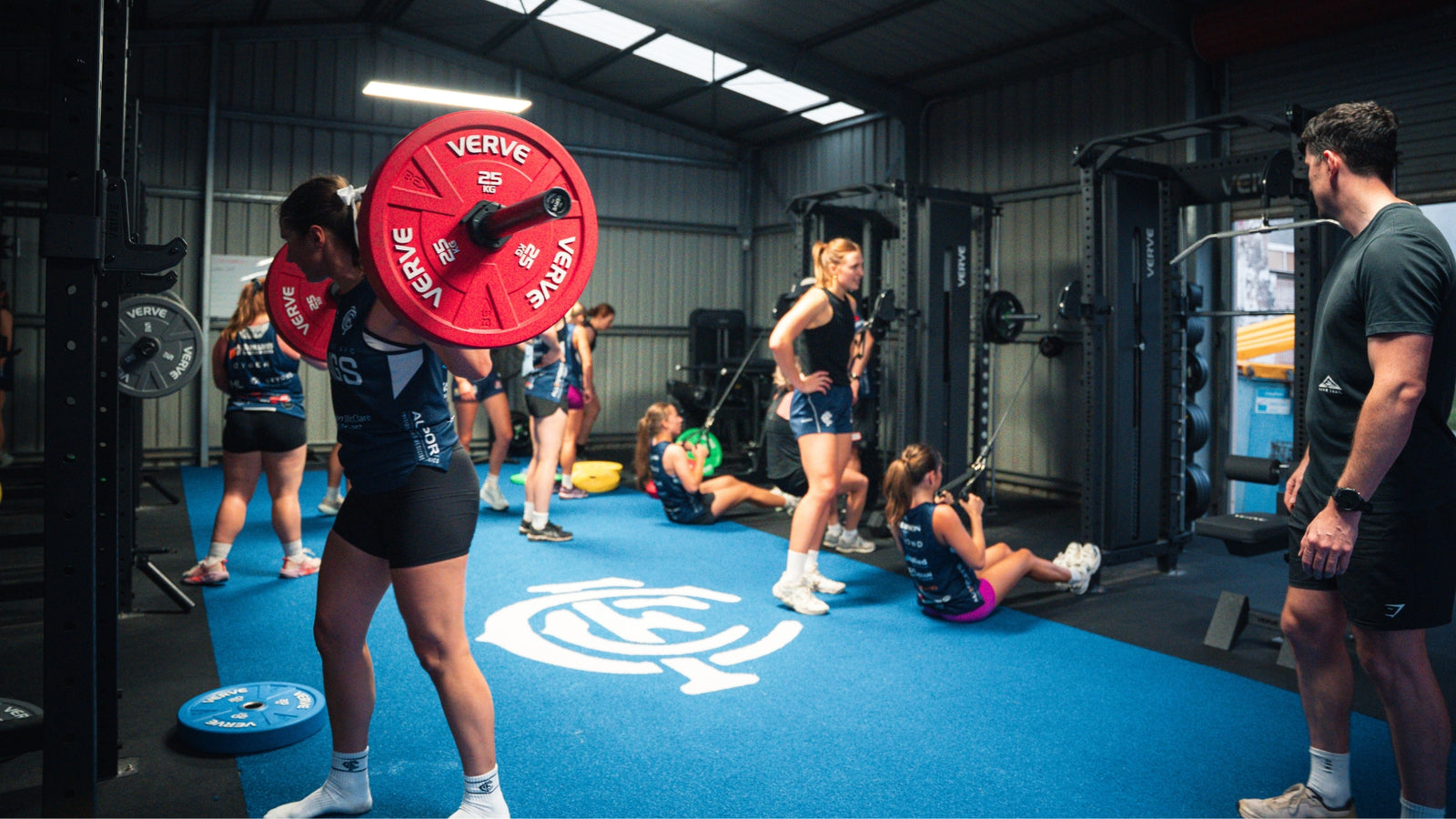
Write down what happens in a medical emergency, a fire, or a security incident when no staff member is present: who members call, what the app or signage tells them to do, and how emergency services find the right entrance. Post it and include it in induction. It sounds basic, but a written, tested procedure is what turns a frightening situation into a manageable one.
An automated external defibrillator, an AED, has become standard practice in Australian commercial gyms, unstaffed or not, given the cardiac risk profile of people exercising hard. Position it somewhere visible and signposted, keep it serviced, and include its location in your induction and your emergency signage.
Insurance implications of going unstaffed
| Item | Why it matters |
|---|---|
| Hours of unstaffed operation | Cover often differs for staffed vs unstaffed hours, confirm both are covered |
| CCTV, duress alarms and lighting specifications | Insurers may ask for evidence these are in place and monitored |
| Member induction records | Demonstrates a documented duty of care if a claim arises |
| Access control and visitor logs | Shows who was on site at the time of an incident |
| Emergency procedure documentation | Confirms members had a way to get help |
Confirm with your insurance broker exactly what public liability cover looks like for unstaffed hours before you flip the switch, not after an incident. Our gym insurance guide covers the categories of cover most gyms need.
Get Your Free 3D Gym Design
Send us your floor plan and most founders have renders back within a week, then a video walkthrough and as many layout changes as it takes, camera lines and duress points included.
Request Your Free DesignFrequently asked questions
Is running a 24/7 unstaffed gym legal in Australia?
Yes, 24/7 unstaffed gyms operate widely across Australia, but there is no single national rulebook. You still carry an occupier's duty of care to members, and requirements around council approval, safety systems and insurance vary by state and council, so confirm specifics locally.
What CCTV coverage does a 24/7 gym need?
Cameras should cover every training area, entry and exit point, and corridors near change rooms, with enough footage retention, commonly at least 30 days, to review an incident. Check camera lines against your actual equipment layout, not just the empty floor plan.
Do I need a duress alarm in an unstaffed gym?
A duress alarm, whether a wall button, wearable fob or in-app SOS, is standard in Australian 24/7 gyms and gives a member a fast way to alert someone when no staff are on the floor. Test it regularly and have a clear, written escalation path.
Is an AED required in a 24/7 gym?
There is no single blanket mandate, but having an AED on site has become standard practice in Australian commercial gyms given the cardiac risk of hard exercise, unstaffed or not. Position it somewhere visible, keep it serviced, and include it in your member induction.
Does insurance cost more for a 24/7 gym?
It can, and cover for unstaffed hours is sometimes handled differently to staffed hours. Tell your broker exactly when you are staffed and when you are not, and what safety systems, CCTV, duress alarms, lighting, you have in place, so your policy actually matches how you operate.
What access control system do I need for a 24/7 gym?
You need a system that logs exactly who enters and exits and flags anomalies like a door held open or a member who never swiped out, tied to your membership and attendance records so you have one accurate log of who was on site at any time.
Do members need an induction before using a 24/7 gym unstaffed?
Yes, it is standard practice and strongly recommended. Walk every member through entry, duress alarm locations, emergency procedures and basic equipment safety before their first unstaffed visit, and keep a record that they completed it.