Search


Weight plates built for commercial floors and sold at the same spec to home gyms. Rubber bumpers you can drop, machined iron plates accurate to within 2 per cent, and calibrated plates down to 0.25kg for the small jumps that move a lift forward.
Bumpers or iron, gym or garage? Ask the team who fits out gyms for a living.
Buying guides: Bumper plates vs cast iron plates · Why progressive overload matters
10 products
A disc you load onto a barbell, loadable dumbbell handle or plate-loaded machine to add resistance. Olympic plates have a 50mm centre hole and fit Olympic bars.
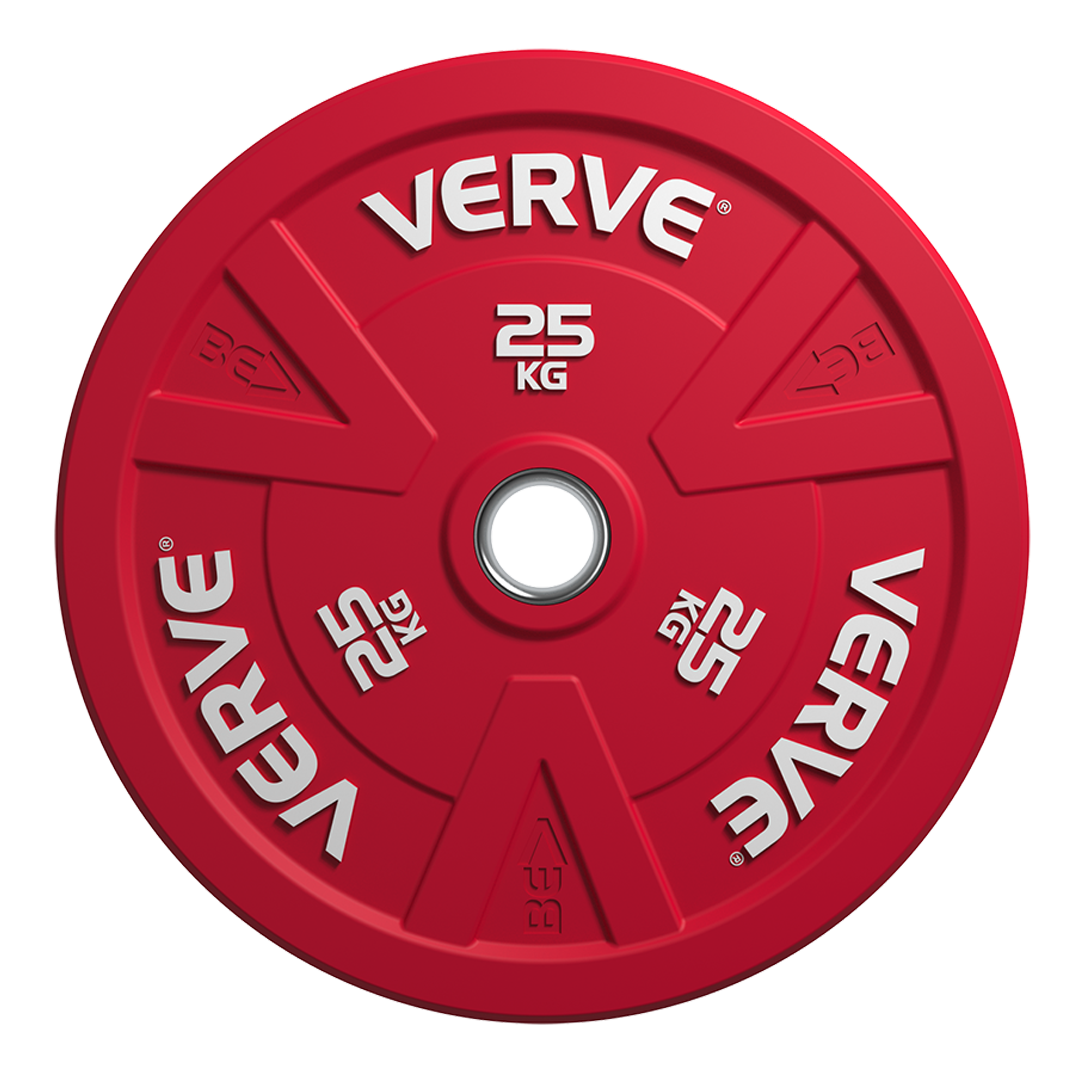
Bumper plates are solid rubber, so you can drop them from overhead in Olympic lifts and CrossFit-style training. Iron plates are thinner, so more weight fits on the bar, and they suit racked lifts like squats, bench and deadlifts. Read bumper plates vs cast iron plates.
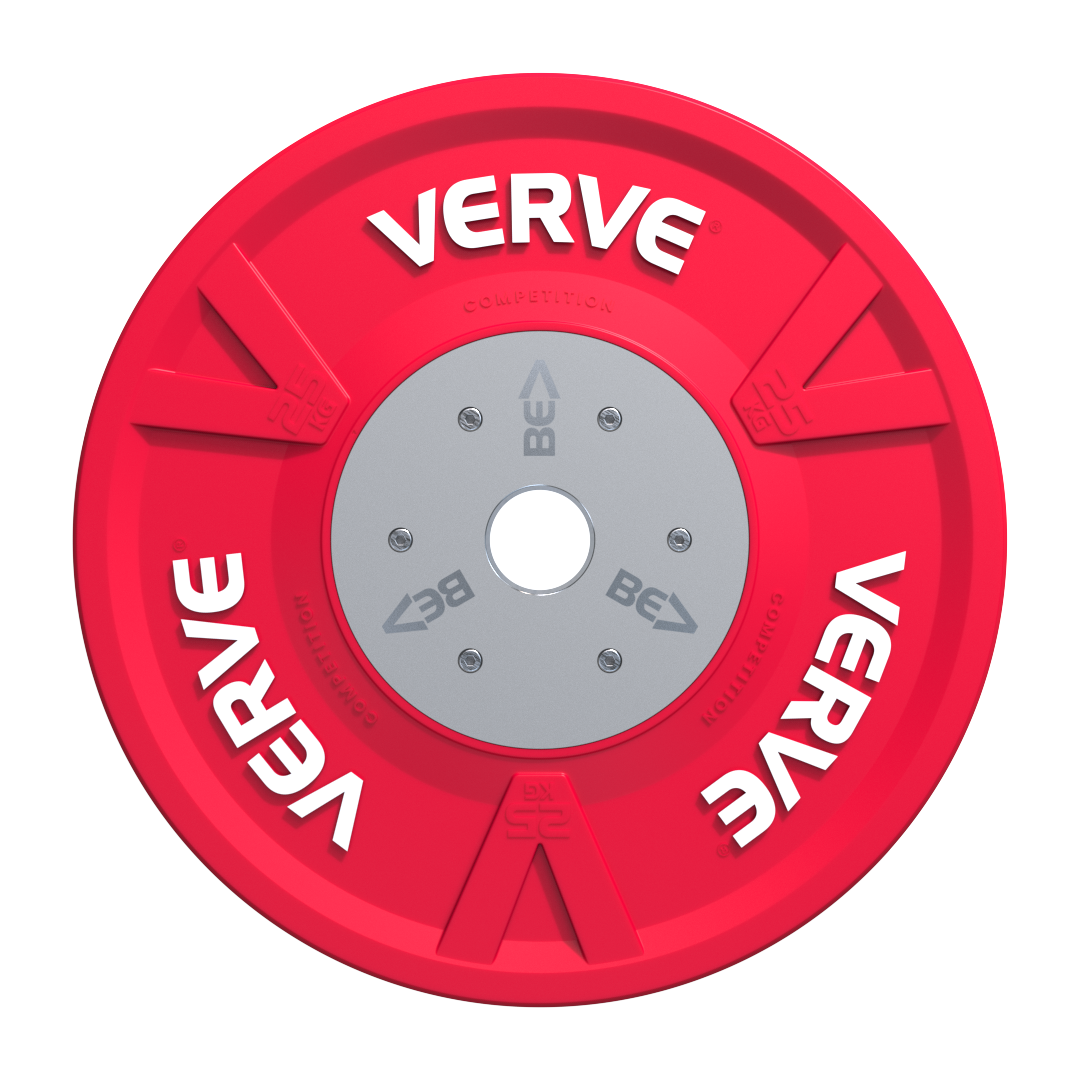
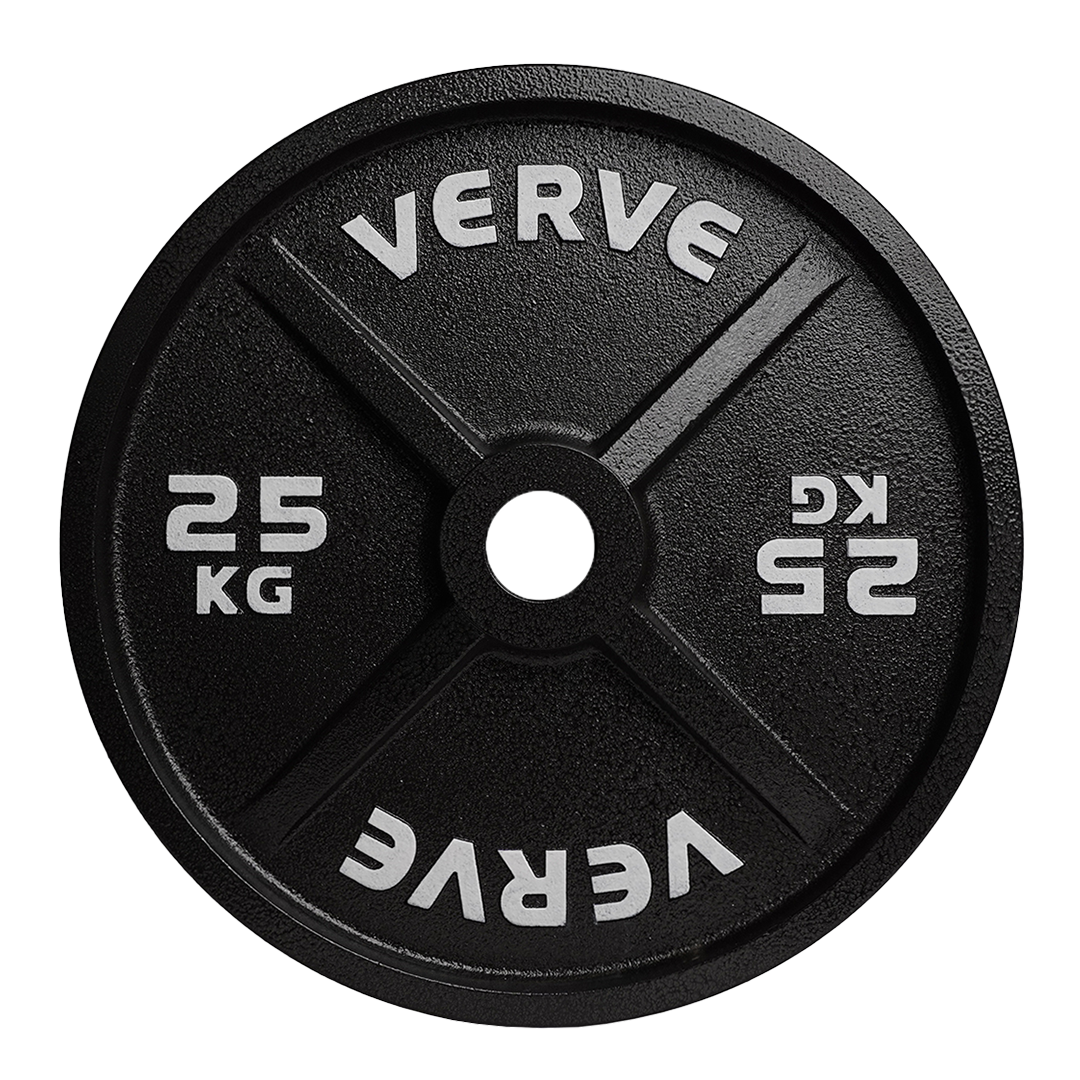
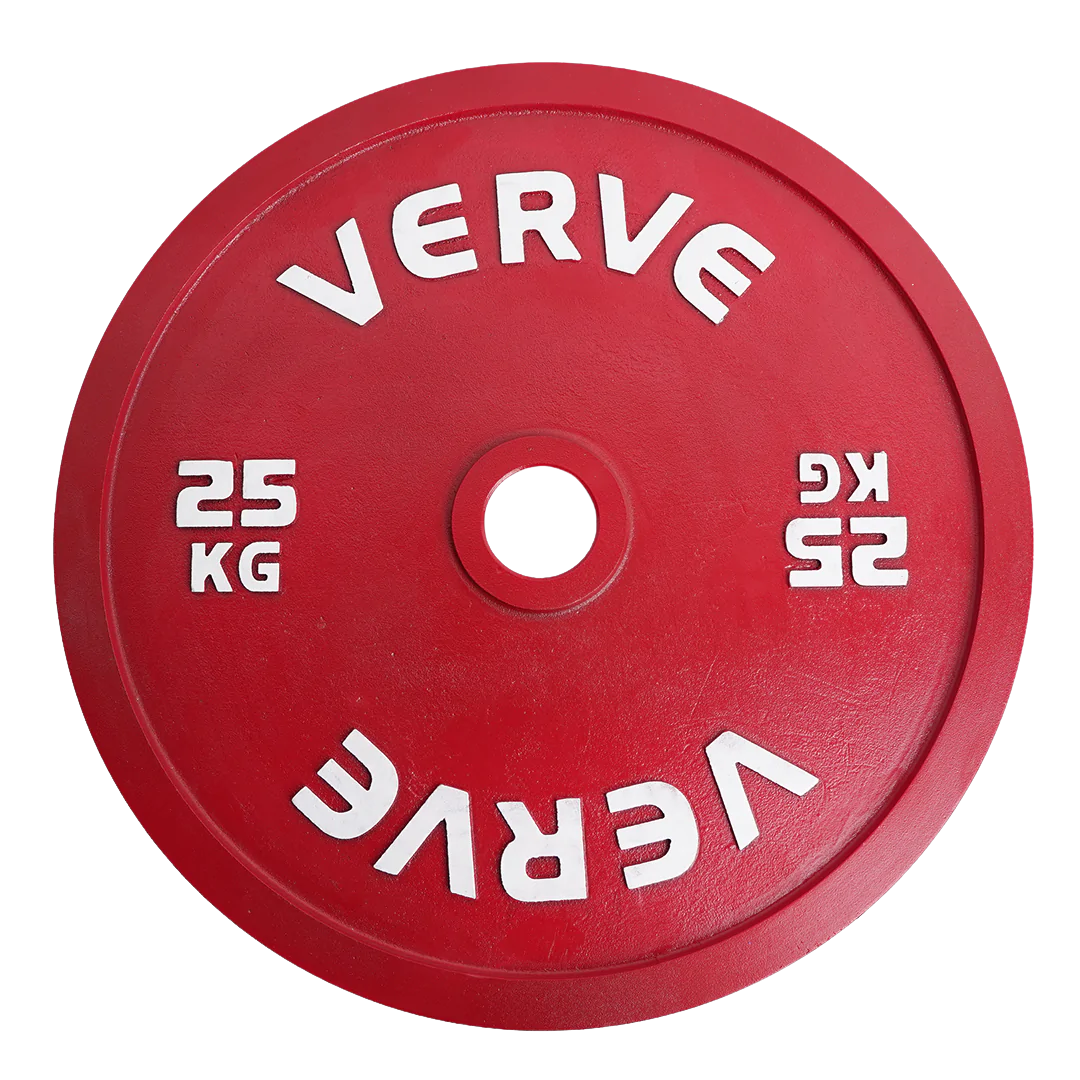
Plates made to a tight weight tolerance, so a 20kg plate weighs 20kg. VERVE Calibrated Competition Bumper Plates use the IWF colours, and VERVE Calibrated Steel Plates come down to 0.25kg for small, accurate jumps in load. See bumper plates or steel and iron plates.
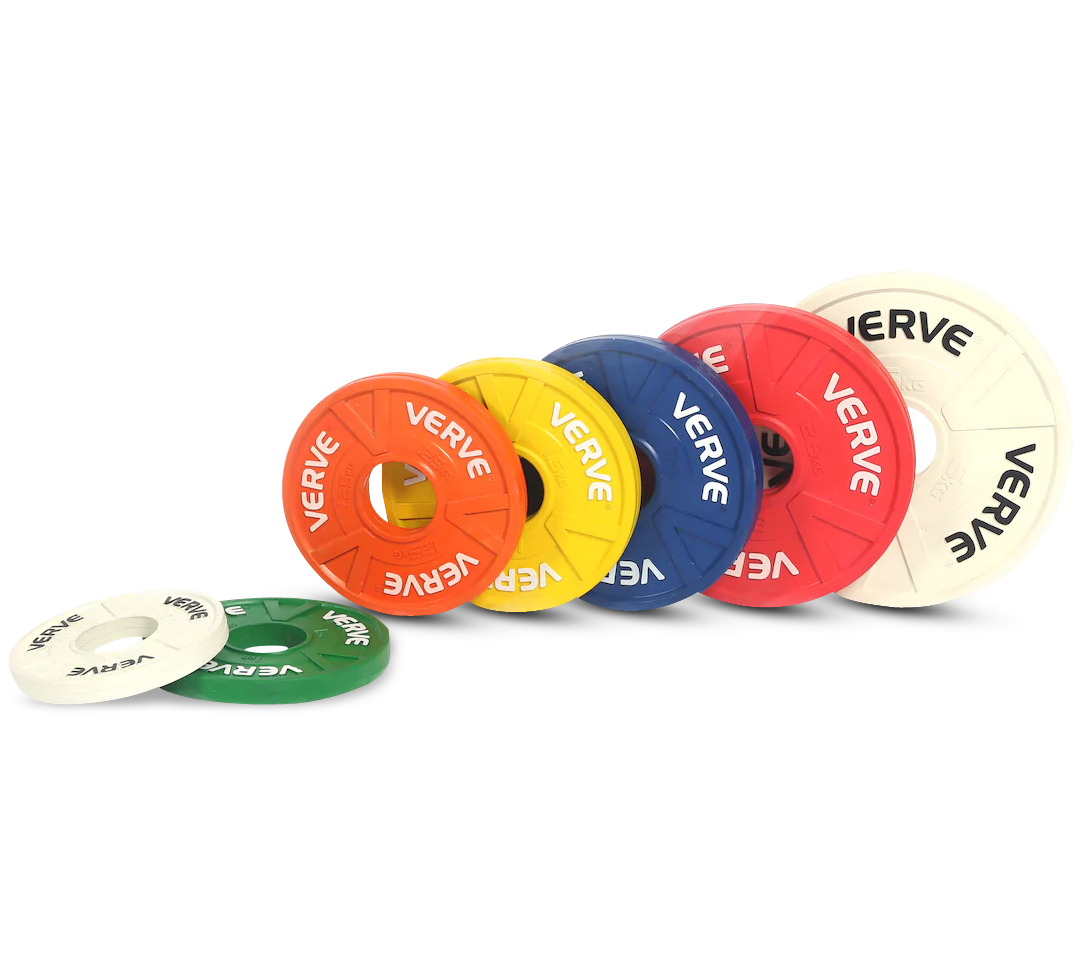
They add weight in small steps, as low as 0.5kg, so you can keep adding load when a full 2.5kg jump is too much. See change plates.
A loaded barbell lets you lift heavier, because both hands share one bar. Dumbbells load each side separately, which builds balance between sides and gives more range of movement. Most gyms need both. See dumbbells.
VERVE Olympic plates fit any Olympic barbell with 50mm sleeves. The bumper plates have stainless steel inserts that sit tightly on the sleeve.


 CALL 1300 1947 48
 TEXT 0468 003 121