Most home gyms do not fail on budget. They stall because the first decision made is which rack to buy, and that is the fourth decision, not the first. Here is the order that works, and a real Australian build that followed it.
If you have been talking about a home gym for a year or more without doing anything, the problem is almost never money. It is that there is no obvious first move. Every search result is a product list, every product list assumes you already know what fits, and nobody tells you what to work out before you spend anything.
So the plan gets put off again.
Three decisions come before the gear.
Get them in this order, and the equipment list writes itself, because by then you already know what the space will take.
1. Your space. The three numbers that decide everything after them.
2. Your room. The things that determine whether you use it, or whether it becomes storage.
3. Your gear. What to buy first and what to add later.
01 | Your Space
Measure it before you buy anything.
Garage, shed, spare room, carport or a corner of the rumpus room. The type of space matters far less than its numbers. Width, depth and ceiling height decide what gear is possible, and no amount of wanting a particular machine changes that.
Take three measurements and write them down before you look at a single product page.
The three numbers
| Measurement | Why it decides things |
|---|---|
| Length and width | Sets your floor plan and how many stations you can run without one blocking another. |
| Ceiling height | Sets whether you can press overhead, do pull ups, or use a full height rack at all. This is the number people forget and the one that cannot be fixed later. |
| Door and entry width | Sets what can physically be carried in. A rack upright or a treadmill that does not fit through the doorway is an expensive lesson. |
Rough clearances to plan around
| Item | Space to allow |
|---|---|
| Power rack, plus working room | About 2.0m x 2.4m of floor, and 2.4m of ceiling as an absolute minimum. 2.7m if you want to press overhead or do pull ups comfortably. |
| Barbell and plate loading | Allow at least 2.7m of clear width so a loaded bar has room either side of the rack. |
| Adjustable bench and dumbbells | About 2.0m x 1.5m, including room to step around the bench rather than over it. |
| Cardio, per machine | Roughly 1.0m x 2.2m, plus half a metre behind a treadmill for safety. |
| Floor work and stretching | 2.0m x 2.0m of genuinely clear mat space. This is the first thing that gets sacrificed and the first thing you miss. |
Add those up against your three numbers and you will very quickly see whether you are working with a two-station setup or a full room. That answer, not a wishlist, is what should drive the shopping.
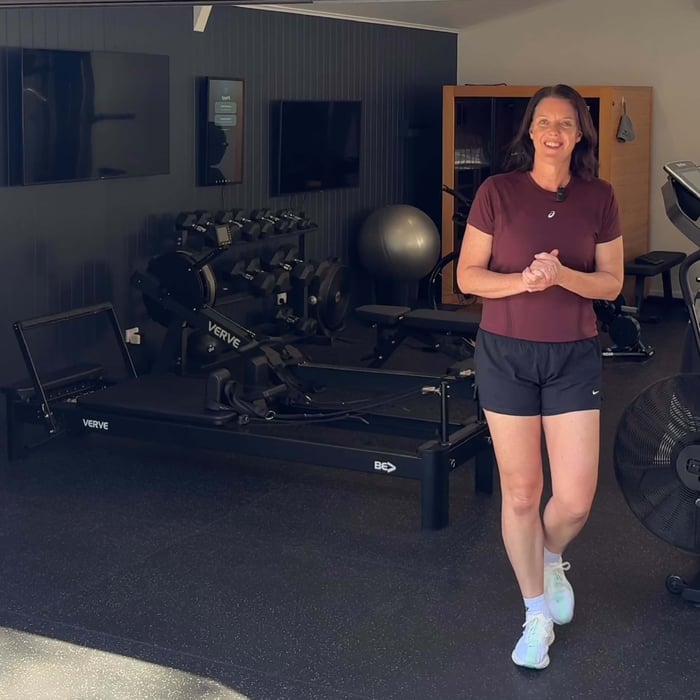
“We were quite limited with the block size. We could only go so wide, so we have gone with a nine metre by six metre. It is certainly big enough to fit everything we wanted in here.” -Jo Brown
02 | Your Room
Height and doors matter more than you think.
A room full of good equipment that nobody wants to sit in for an hour becomes a very expensive storage unit. This is the decision most people skip, and it is the one that determines whether the gym gets used in year three.
Ceiling height
The single most limiting number in the whole build. Overhead pressing, pull ups, jumping rope and any full height rack all live or die on it. Under about 2.4m you are working around it permanently. At 2.7m or more you have a real gym. If you are building or lining a shed, this is worth spending money on before anything else.
Doors and light
Wide doors do two things. They let air and light through a room that will otherwise get stale and hot, and they make the space feel like part of the house rather than a shed out the back. Stacker or bi-fold doors are the upgrade people rate most highly after the fact.
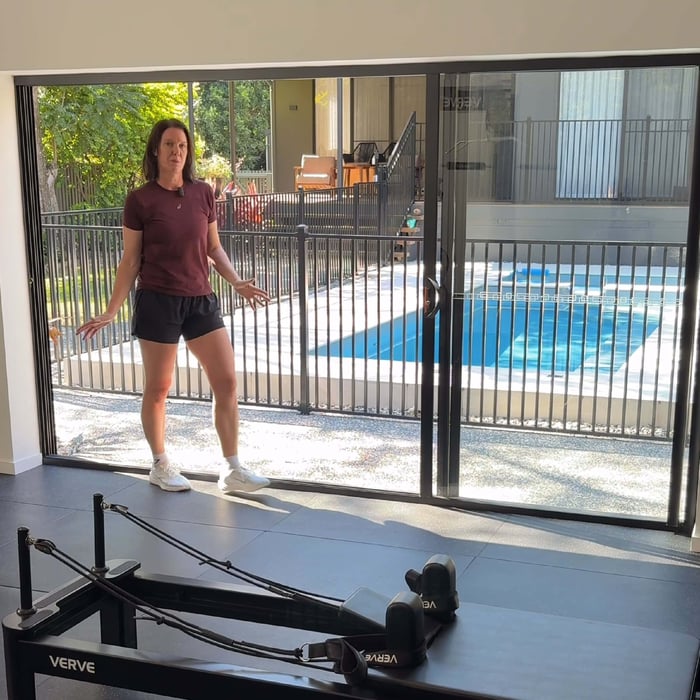
“Having these stack of doors is a game changer. It really opens the space up and it feels like it brings the outside in." -Jo Brown
Flooring
Rubber over concrete, and thicker than you think under any area where weight gets dropped. It protects the slab, it cuts noise, and it is the difference between training barefoot and not wanting to touch the floor. Retrofitting flooring around installed equipment is a job nobody enjoys, so plan it in from the start.
Power and climate
Count your powered items before the electrician books in. Cardio, a fan or split system, lighting, sound, a fridge and, if it is on the list, a sauna. Australian garages and sheds swing from freezing to unusable in summer, and a room you avoid four months a year is a room you have half paid for.
Plan This Now, Not Later
Power points, flooring and ceiling height are the three things that are cheap during a build and expensive afterwards. Equipment can be added any time. These cannot.
03 | Your Gear
One list beats four suppliers.
Now the gear. And with the space and the room settled, this part is mostly arithmetic.
Buy first
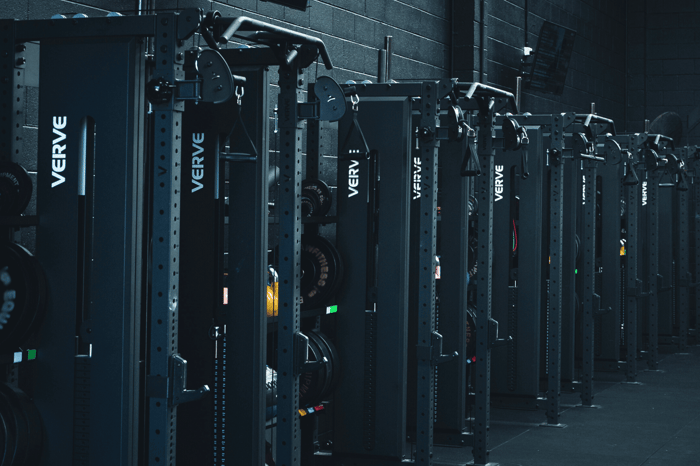
1. A rack. The anchor of the room. Everything else arranges itself around it, and attachments turn one rack into a dozen stations later.
2. A barbell and plates. The most training per dollar of anything you will buy.
3. An adjustable bench. Doubles the number of exercises available immediately.
4. Flooring. Not exciting, and it protects everything above it.
5. A dumbbell set or adjustable pair. Fills every gap the barbell leaves.
Add later
Cardio, cable machines, specialty bars, rack attachments, recovery gear. None of it needs to arrive in the first order, and holding some budget back means the second round is chosen based on how you actually train in the space rather than how you imagined you would.
Why the supplier count matters
Four suppliers is four lead times, four finishes that do not quite match, four delivery windows to be home for, and four different people to chase when one bolt is missing. One supplier is one plan, one schedule and one look across the room.
That last part matters more than it sounds. A room where everything matches reads as a gym. A room of mismatched brands reads as a collection of equipment.
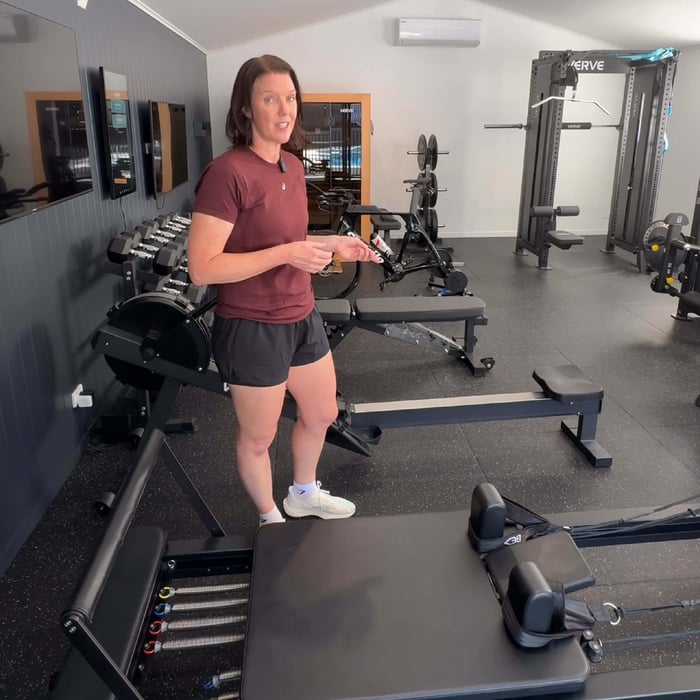
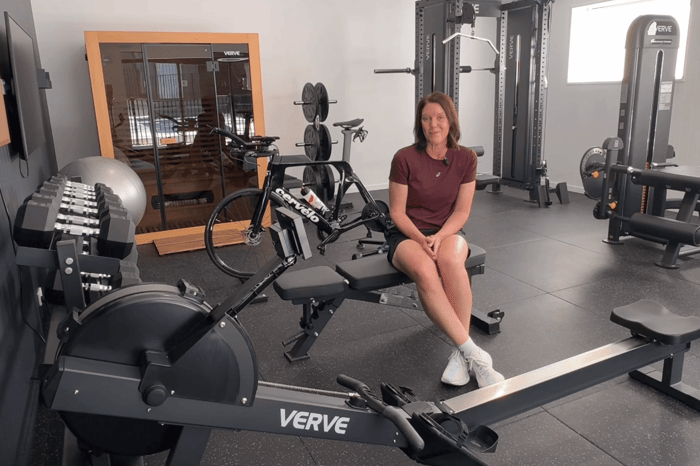
“We wanted to purchase everything from the one supplier, and we were surprised to find with VERVE that we could do that. Not only could we get all of our standard gym equipment, but we could also get things like our reformer Pilates machine and our sauna.” -Jo Brown
What it looks like when the order is right.
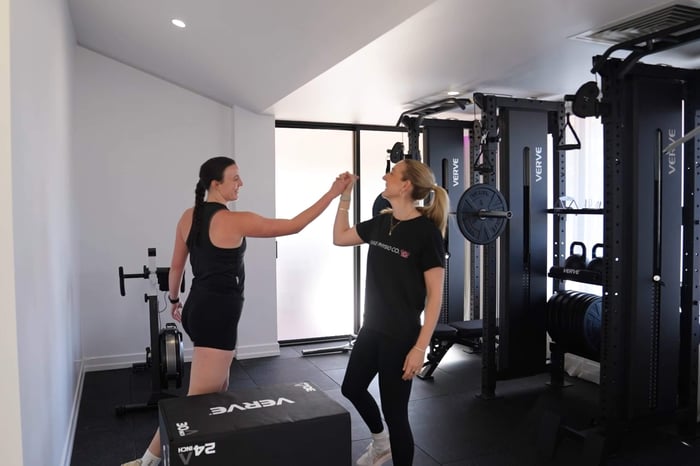
Jo Brown and her family had talked about a home gym for years. When they moved, the backyard was grass and an old open shed. Six months from the first conversation to the first workout, and the calls were made in the order above.
| Decision | What she did |
|---|---|
| Space | Block size capped the width, so the build was planned to 9m x 6m rather than around a wishlist. |
| Room | High ceilings and a double stack of doors. The two things she rates most, and both had to be decided during the build. |
| Gear | Everything from one supplier, including the reformer Pilates machine and the sauna. Three deliveries in total. |
| Build | Assembled by Jo and her partner. No installers. |
It is now the most used room in the house.
“If you are thinking about building a home gym and do not know whether to pull the lever, absolutely go ahead. You will not regret it.” -Jo Brown
Send your dimensions. Get a layout back.
Length, width and ceiling height is all it takes to start. A VERVE specialist will map out what fits, what to leave room for, and what to add later.
FAQs
What is the minimum space for a home gym?
A single car garage is enough for a rack, a bench, a barbell and dumbbells with room to move, provided the ceiling clears about 2.4m. Below that, ceiling height rather than floor area becomes the constraint.
How much should a first home gym cost?
It depends entirely on the space and how you train, which is why a layout comes before a number. What is worth knowing is that commercial grade gear bought once outlasts consumer gear bought twice, and holds value if the setup ever changes.
Can I set it up myself?
Most of it, yes. Jo and her partner assembled their entire room between the two of them. Larger machines are easier with two people and a bit of patience rather than a trade.
What is the most common mistake?
Buying gear before measuring. The second most common is ignoring ceiling height, because it is the only number on the list that cannot be fixed afterwards.